

On busy job sites, in shared workshops, or even in a packed home garage, tools get mixed up fast. When multiple people use the same equipment, clear tool identification matters for organization, accountability, and avoiding expensive replacements.
When comparing tool labels vs engraving, most professionals are really deciding between flexibility and permanence. Both get the job done, but they differ quite a bit in terms of durability, cost, flexibility, and day-to-day convenience.
In this article, we’ll compare both methods side by side and look at where each one works best, so you can decide which solution fits your workflow and tools more effectively.
Tool Labels: Flexible and Easy to Use
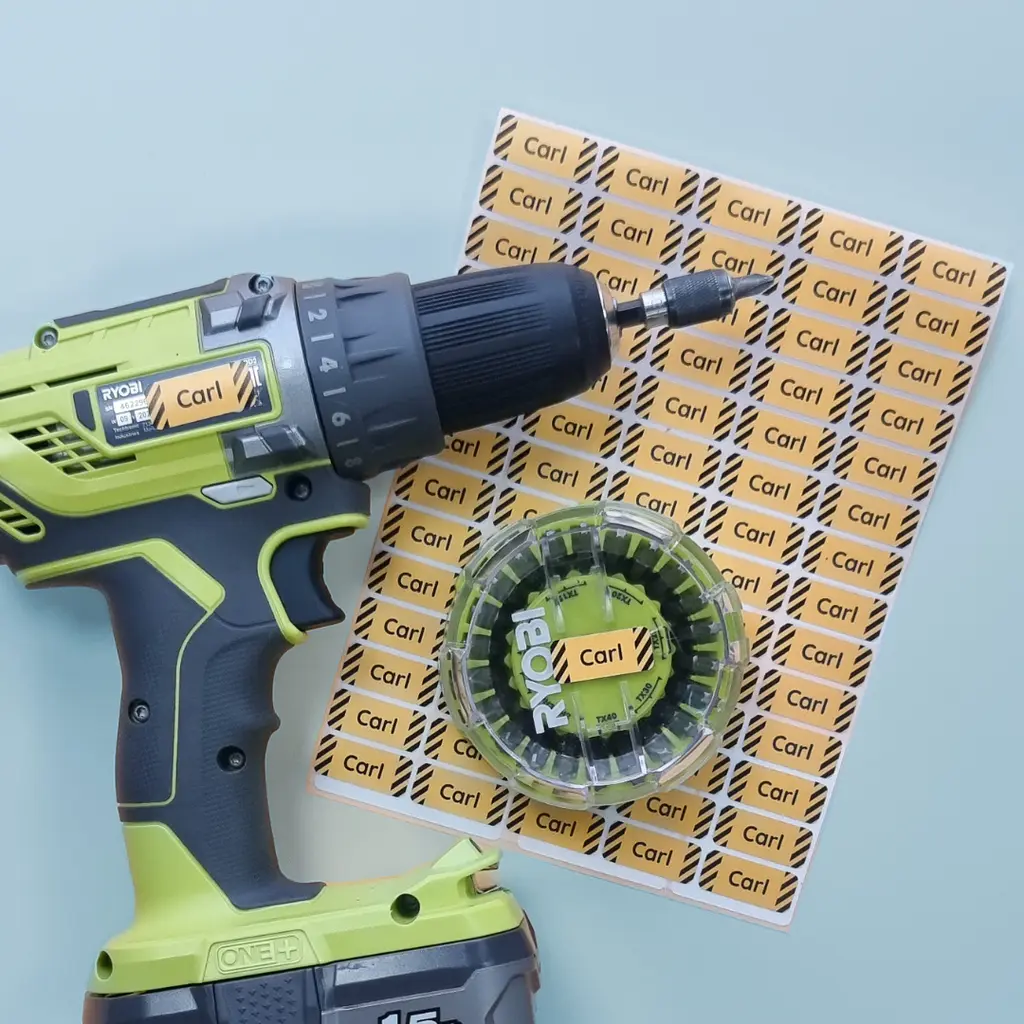
Tool labels are one of the easiest ways to keep equipment organized and easy to identify. Many contractors and technicians use personalized tool labels to reduce mix-ups on shared equipment and make expensive tools easier to track. They can be applied in seconds and hold up well on many common tool surfaces.
Some of their biggest advantages include:
- Easy application and flexibility: Labels take only seconds to apply and can be replaced anytime ownership changes or updated contact information is needed.
- Cost-effective for larger tool collections: Compared to engraving, tool labels are usually the more affordable option, especially when labeling multiple tools or complete sets.
- Customizable and easy to recognize: You can add names, company departments, color coding, barcodes, or phone numbers to create a system that is easy to recognize at a glance.
That said, labels also have limits. In extremely rough environments—such as constant friction, aggressive chemicals, or heavy exposure to moisture—they can show wear over time. High-quality labels are designed to be durable, but even the strongest labels will eventually show wear under constant abuse.
Proper application also matters. Applying labels to a clean, dry surface helps ensure the best possible adhesion and long-term readability.
Engraving: Durable but Less Flexible
Engraving is one of the most permanent ways to label tools. Instead of applying something to the surface, the marking is etched directly into the material itself.
Its biggest advantage is durability. Engraved markings can withstand moisture, dirt, oil, and heavy daily use without fading or peeling away. This also makes engraved tools easier to identify and harder to resell, which can help discourage theft.
Engraving does have a few downsides, though. Compared to labels, it is usually more expensive and takes more time, especially when dozens or even hundreds of tools need to be marked.
It’s also far less flexible. Once a tool is engraved, the marking cannot easily be changed or removed. If ownership changes or contact information needs updating, the old engraving remains permanently visible.
Convenience is another major difference. A roll of tool labels can stay in a toolbox or work truck and be used whenever new equipment comes in. Engraving usually takes more planning, special equipment, or an outside service, which makes it less convenient in fast-moving work environments.
Depending on the material and engraving method, the process can also affect the surface of the tool. Laser engraving works well on many common metal tools, but coated tools can sometimes lose part of their protective coating around the engraved area.
Which Option Is the Better Fit?
When comparing tool labels vs engraving, both options have advantages depending on how and where the tools are used.
Tool labels are often the better option when flexibility and efficiency are important. They work especially well for larger tool collections, shared work environments, or workplaces where tools are constantly shared between employees, contractors, or crews. Because labels can be applied instantly, they make it easy to mark new tools whenever needed without interrupting work or planning ahead.
They’re also a practical choice if you want a more customizable system. Names, contact information, or color coding can all help create a setup that stays organized and easy to manage.
Engraving, on the other hand, is often preferred for particularly valuable tools or equipment exposed to extremely demanding conditions over many years. Since the marking becomes part of the tool itself, it offers maximum permanence and strong protection against wear or removal.
For some workplaces, a combination of both methods can make the most sense. Expensive machines or specialized equipment may benefit from engraving, while labels provide a faster and more flexible solution for everyday tools and accessories.
If you want a fast, professional, and cost-effective way to keep tools organized, personalized tool labels are one of the easiest ways to track equipment across a workshop, garage, or job site.


